REPTIZOO Dimming Thermostat, PID Temperature Controller with Memory Function, Reptile Thermostat for Reptile Heat Lamp Review (2026)
Updated September 14, 2026 · Research-based review
Our verdict
REPTIZOO's dimming thermostat uses PID logic to smoothly brighten or dim a connected heat lamp toward a set temperature instead of snapping fully on and off, and it remembers its settings through a power cut. It fits keepers running basking bulbs who want steadier heat, though its dimming behavior suits lamps better than simple heat mats.
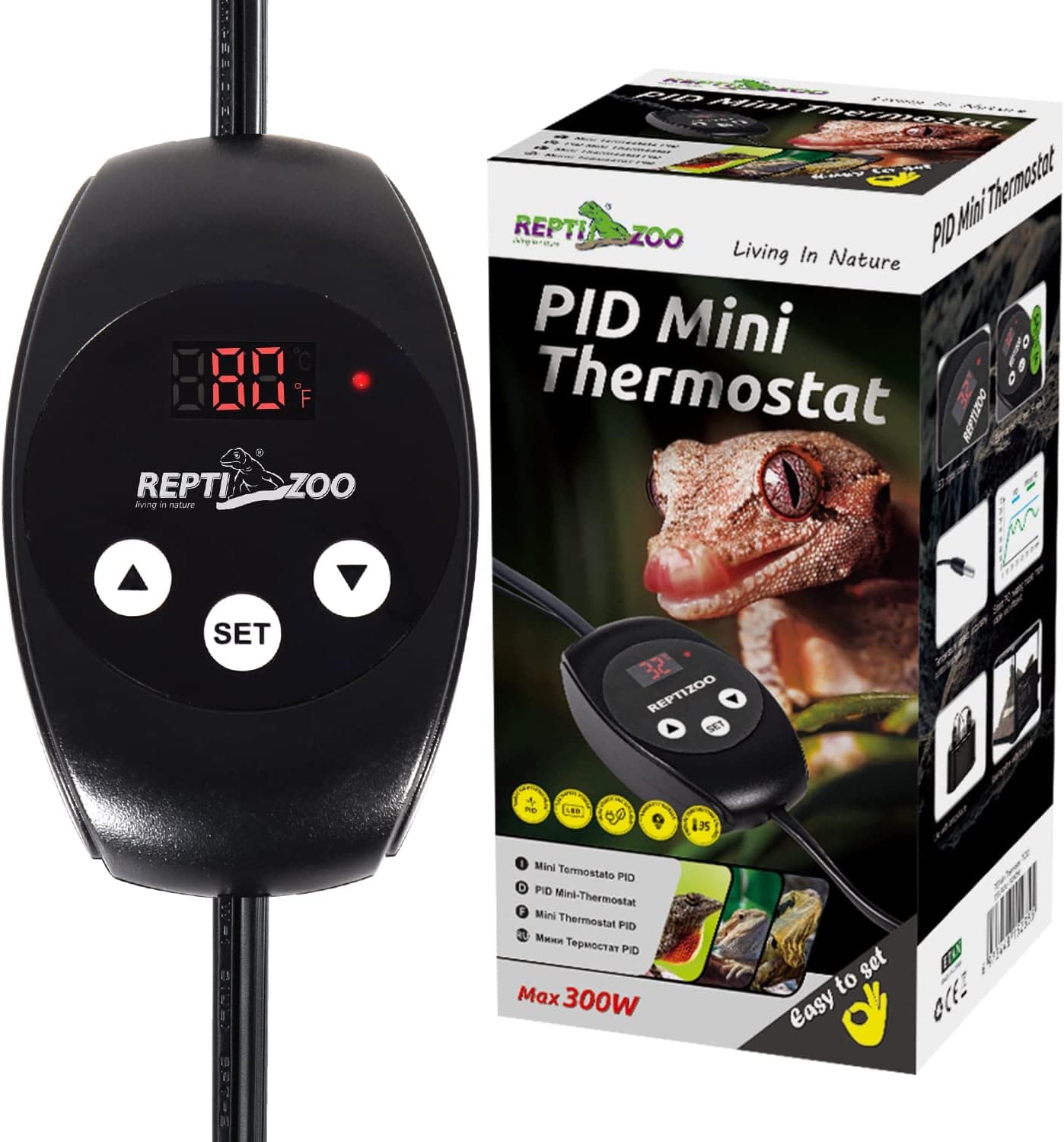
REPTIZOO's dimming PID thermostat with a memory function, built to control reptile heat lamps smoothly.
Price range: $ (Budget)
What we liked
- + Dimming control keeps basking bulbs steady instead of flicking on and off
- + PID logic reduces temperature overshoot around the set point
- + Memory function keeps settings after a power cut
Trade-offs
- - Do not use it with mercury vapor bulbs, which should not be dimmed
- - Dimming is less suited to heat mats that prefer simple on/off control
What a dimming PID thermostat does differently
Most basic reptile thermostats work on simple on off control, cutting power completely once the set temperature is reached and switching fully back on once it drops, which can cause a basking bulb to flicker between bright and off and lets the actual temperature swing above and below the target. This REPTIZOO unit instead uses PID control, a method that continuously adjusts how much power reaches the bulb rather than switching it fully on or off, so as the enclosure nears the set temperature the bulb dims down gradually and brightens back up as it cools, holding a steadier temperature with less overshoot. That smoother output is the main reason keepers choose a dimming thermostat over a cheaper on off model for basking setups.
Range, output and display
The thermostat controls temperature across a 41 to 140 degree Fahrenheit range and can handle up to 300 watts of connected load, which covers most halogen and incandescent basking bulbs used in reptile enclosures. Current and set temperatures both show on an LED digital display, making it straightforward to check where the enclosure sits relative to the target without needing a separate thermometer, though most keepers still run an independent thermometer as a backup check on the probe reading. The unit includes a memory function that retains the last temperature setting after an unexpected power outage, so a brief power cut does not mean reprogramming the thermostat from scratch once power returns.
Setting it up day to day
Installation follows the pattern of most plug in reptile thermostats: the heat lamp fixture plugs into the thermostat's outlet, and a temperature probe gets placed at the basking spot the animal actually uses, since that is the reading the unit will control against rather than general room temperature. Because the dimming behavior ramps power up and down rather than switching abruptly, it pairs best with bulbs designed to be dimmed, and REPTIZOO's own product listing specifies it should not be used with mercury vapor bulbs, which are not built for dimming and should be run on straight on off control instead. Heat mats and similar low wattage heaters also generally do better on simple on off thermostats than on a dimming unit built around lamp control.
How it stacks up against other reptile thermostats
Against WiFi enabled thermostats from brands like Inkbird that add remote monitoring and app alerts, this REPTIZOO unit is simpler and more focused, trading remote access for a design built specifically around smooth PID control of a basking bulb. For keepers who mainly want stable basking temperatures without bulb flicker and do not need to check the app from across town, that trade favors this unit, while keepers managing multiple enclosures who want to catch a heating failure remotely may prefer a connected option instead even at a higher price.
Bottom line
For anyone running a halogen or incandescent basking bulb who wants steadier temperatures and less bulb flicker than a basic on off thermostat provides, this REPTIZOO dimming PID controller is a solid, focused choice that earns our score of 8.7 out of 10. Keep it away from mercury vapor bulbs, which should stay on simple on off control, and consider a WiFi connected thermostat instead if remote monitoring matters more to your setup than the smoother dimming behavior this unit is built around. For a single enclosure with a standard basking bulb, though, the straightforward display and memory function here cover the basics most keepers actually need.
Frequently asked questions
Can this thermostat be used with a mercury vapor bulb?
No, mercury vapor bulbs are not designed to be dimmed and the manufacturer specifies they should not be used with this dimming thermostat.
What happens to my temperature setting after a power outage?
The memory function saves the last temperature setting, so it resumes at the same setting automatically once power is restored rather than needing to be reprogrammed.
Is this thermostat better for a heat lamp or a heat mat?
It is built around dimming control, which suits basking lamps best. Simple heat mats generally work better with a straightforward on off thermostat instead.
What is the maximum wattage this thermostat can handle?
It is rated for up to 300 watts of connected load, which covers most halogen and incandescent basking bulbs used in reptile enclosures.
Prices change often, so check the current price and availability on Amazon.
Check price on AmazonTerrarium Nest may earn a commission from the link above.