Basking Temperatures and Gradients
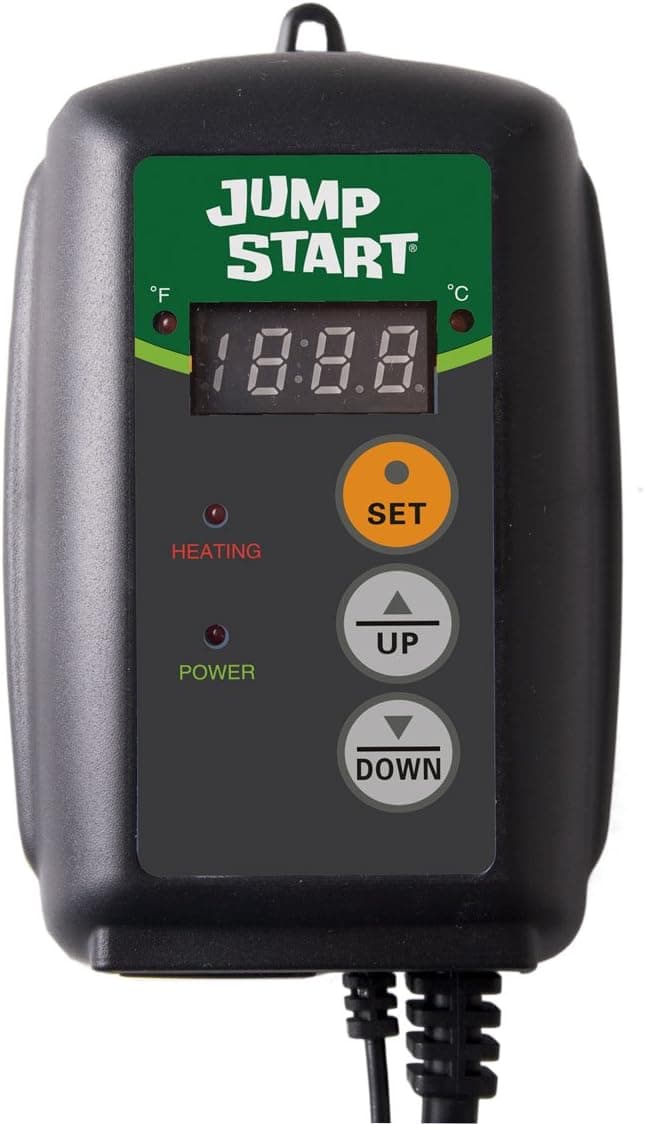
Reptiles and amphibians do not generate their own body heat the way mammals do. They regulate by moving: into the sun, into the shade, onto warm rock, under cool leaf litter. That behaviour is the whole basis of terrarium heating. Your goal is not to hold the enclosure at one correct number but to offer a range of temperatures across the space so the animal can choose the one it needs at that moment. A habitat with a single uniform temperature, however well chosen, removes the animal's ability to regulate and is a worse setup than a well built gradient.
In practice this means heat at one end only. The warm end carries the basking site at the species target surface temperature, and the opposite end sits meaningfully cooler, giving the animal a genuine retreat. Between them, temperatures fall away gradually, and that middle band is where many animals spend most of their time. Get the two ends right and the middle looks after itself. If your cool end is nearly as warm as your basking site, the animal has nowhere to go, and that is a common cause of restless glass surfing and hiding in a water bowl.
How you measure matters more than most people expect. A basking temperature is a surface temperature, taken on the rock, branch, or substrate where the animal's body will actually rest, and the right tool is an infrared temperature gun pointed at that surface. Ambient air temperatures at the warm and cool ends are separate readings, best taken with digital probe thermometers left in place so you can watch them over time. Stick on dial gauges and colour strips are not accurate enough to base a habitat on. Take readings at several points and at several times of day, because a basking spot that is perfect at noon may run hot in the afternoon once the room warms up.
Night is part of the cycle, not an afterthought. Most species benefit from a night drop, and many tolerate or need a cooler night than keepers expect, because in the wild temperatures fall after dark. Check the species care sheet for the acceptable night range. If your room stays within that range on its own, the honest answer is to turn the heat off overnight and let it. Where supplemental night heat is genuinely required, use a non light emitting source such as a ceramic heat emitter or a radiant panel on a thermostat, since coloured night bulbs still emit visible light and disrupt sleep cycles.
Several things will quietly shift your gradient after you have set it. Room temperature changes with the season and with heating or air conditioning. A thick new layer of substrate insulates the floor differently. A large water bowl moved under the basking lamp raises humidity and cools the surface below it. A branch repositioned closer to the bulb creates a hotter perch than you intended. This is why a gradient is worth rechecking every few weeks and after any change to the layout, rather than being treated as a one time setup task.
Watch the animal as your final check, because behaviour tells you what the numbers cannot. An animal basking constantly with a gaping mouth may be struggling to reach temperature or may be overheating, depending on context. One that never leaves the cool end, or that presses against the glass at the far corner, is telling you something about the warm end. Persistent food refusal, lethargy, or an animal that seems unable to digest are signs worth taking seriously. Verify your readings first, then, if the environment checks out and the behaviour continues, consult a reptile experienced veterinarian rather than continuing to adjust dials.