Bearded Dragon Lighting Setup: What Goes Where and Why
Published How we research
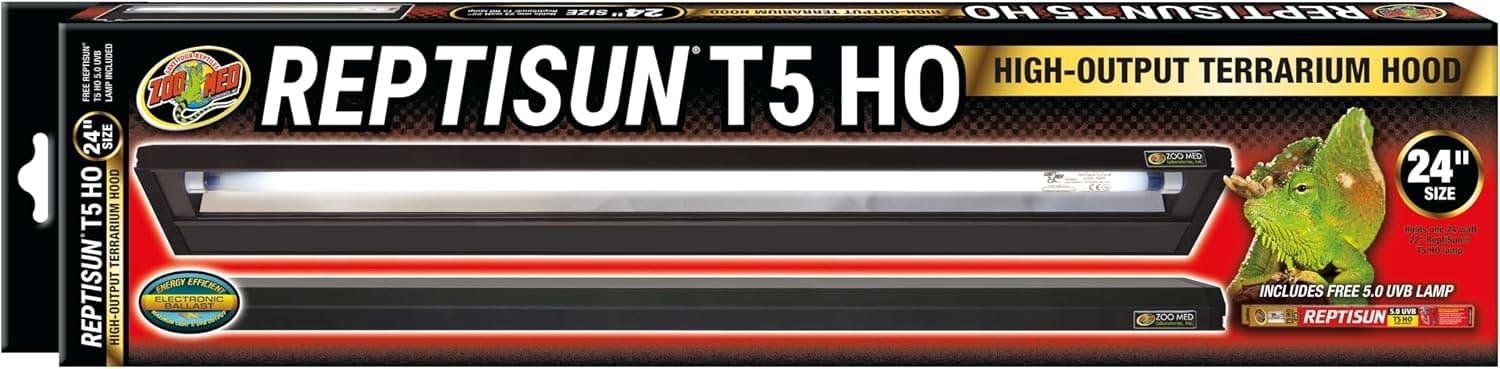
A bearded dragon lighting setup needs two lamps working together at the warm end of the enclosure: a bright halogen basking lamp for heat and a linear T5 HO UVB tube so the animal can make vitamin D3. Mount them side by side so the warmest, brightest and highest UV spot all overlap on the basking platform, put both on a timer for about 12 hours a day, and leave the far end cooler and shadier. The rest of this guide covers which lamp does which job, where each one goes in a typical 4 by 2 by 2 foot enclosure, and how to check the result with a temperature gun and a UV meter.
The two lamps every bearded dragon enclosure needs
The basking lamp supplies heat and bright visible light. A halogen flood bulb is the usual choice because it produces a wide, even patch of warmth and strong light from above, which is what a sun-basking lizard is built to use. Most current care guides give a basking surface temperature of about 100 to 110 F (38 to 43 C) for bearded dragons, with the cool end of the enclosure around 75 to 85 F (24 to 29 C). The wattage that gets you there depends on enclosure height, ventilation and room temperature, so treat any wattage as a starting point and measure the result.
The UVB lamp is a separate job. Bearded dragons need UVB to produce vitamin D3 and use the calcium in their diet, and the standard recommendation is a linear T5 HO tube in a 10.0 or 12 percent strength, mounted in a fixture with a reflector. Compact and coil UVB bulbs only cover a small patch, which is not enough for a 4 foot enclosure. Glass and clear plastic block UVB, so nothing solid can sit between the tube and the animal.
Where each lamp goes: a simple layout
Picture the enclosure from the front and divide it into thirds. In the left third sits the basking platform, with the halogen lamp directly above it. The UVB tube starts at that same end and runs alongside the basking lamp toward the middle, so it covers roughly half to two thirds of the enclosure length. In a 48 inch enclosure that usually means a 22 inch or 34 inch tube. The right third has no lamps at all: this is the cool, dimmer end, with a hide for retreat.
The overlap is the point of the layout. In the wild, heat, light and UV all arrive together from the sun, so a dragon that is warming up should be receiving UVB at the same time. If the tube sits over the cool end, the animal has to choose between heat and UV and usually picks heat. Mount both lamps overhead and shining down, not on a side wall at eye level, because a lizard's eyes are shaded from above and not from the side.
Setting UVB distance and dealing with mesh
UVB strength at the animal depends on the distance between the tube and the basking surface. The target most current bearded dragon care guides give is a UV index of about 4 to 6 at the basking spot, fading toward zero at the cool end. Every tube manufacturer publishes a distance chart for each tube strength, with and without a reflector. Use the chart for your exact tube and fixture instead of a generic number, since a few inches make a large difference.
A screen top changes the math. Mesh between the tube and the animal blocks part of the UVB, commonly around 30 to 50 percent depending on how fine the mesh is, so a tube resting on a screen has to sit closer to the basking surface than one mounted inside the enclosure. The easiest adjustment is usually the platform, not the lamp: raise or lower the basking surface until the reading is right. A UV index meter is the only way to confirm the number, and it also shows when a tube has faded. Without a meter, follow the chart closely and replace the tube on schedule.
Getting the basking temperature right
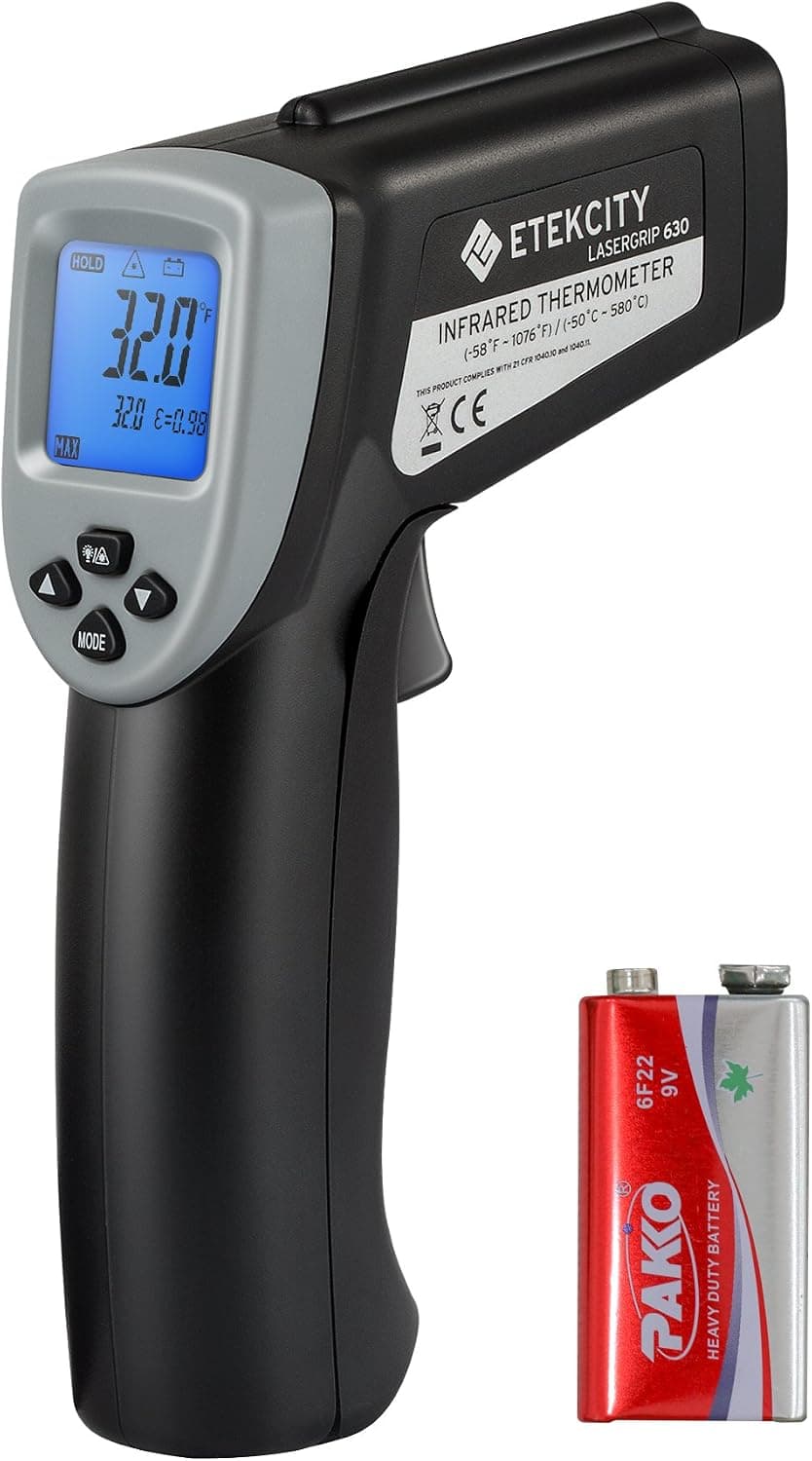
Measure the surface of the basking platform with an infrared temperature gun after the lamp has been on for at least an hour. Stick-on dials read the air at the wall, not the spot where the animal lies. If the surface is too hot, dim the lamp, lower the wattage or lower the platform. If it is too cool, do the reverse. Run the basking lamp on a dimming thermostat or a plug-in lamp dimmer. An on/off thermostat makes a light-emitting bulb flash on and off, which shortens bulb life and is unpleasant to live under.
The fixture matters too. Use a dome with a ceramic socket rated above the wattage of the bulb, and fit a guard on any lamp mounted inside the enclosure so the animal cannot touch it. The warm patch should be wide enough to cover the dragon's whole body, which is another reason to choose a flood bulb over a narrow spot. Recheck temperatures when the seasons change, because room temperature shifts the whole gradient.
Timers, day length and what to do at night
Put the basking lamp and the UVB tube on the same timer so they switch on and off together. Twelve hours on and twelve hours off is a simple schedule that works all year. Some keepers lengthen the day to around 14 hours in summer and shorten it to 10 to 12 hours in winter to follow the seasons. A consistent schedule matters more than the exact figure.
At night, switch everything off and let the enclosure go dark. Bearded dragons handle a night drop well, and most care guides treat night temperatures down to about 65 F (18 C) as acceptable for healthy adults, so most homes need no night heat. If the room gets colder than that, add a lightless heat source such as a ceramic heat emitter or deep heat projector on a thermostat. Skip red and blue night bulbs: reptiles can see colored light, and it interrupts the dark period.
Common lighting mistakes and how to spot them
Most problems come from a short list. The UVB tube is mounted over the cool end. A coil bulb is the only UVB source over a 4 foot enclosure. The tube rests on fine mesh far above the basking spot, so very little UVB reaches the animal. The tube is old: T5 HO tubes are generally replaced about every 12 months, because UVB output declines while the visible light looks unchanged. Write the install date on the tube. The last one is a basking lamp that was never measured and runs far hotter or cooler than assumed.
The animal gives clues as well. A dragon that avoids the basking area or stays pressed against the cool end may be too hot. One that sits under the lamp all day, stays dark in color and eats poorly may be too cool or short on UVB. Squinting or closed eyes under a new lamp call for an immediate check of the lamp type and distance. Tremors, weakness, a soft jaw or trouble lifting the body are not lighting adjustments to make at home: take the animal to a veterinarian with reptile experience.
Frequently asked questions
What wattage basking bulb does a bearded dragon need? There is no single answer, because enclosure height, ventilation and room temperature all change the result. Many keepers with a 4 by 2 by 2 foot enclosure end up with a 75 to 100 watt halogen flood on a dimmer, but the only reliable test is the surface temperature of the basking platform measured with an infrared gun.
Can I use a coil or compact UVB bulb instead of a tube? Not as the only UVB source in a full-size enclosure. Compact bulbs cover a small area, so the dragon gets useful UVB only when it sits directly under the bulb. A linear T5 HO tube with a reflector spreads UVB along the warm half of the enclosure and gives a proper gradient.
How often should the UVB tube be replaced? About every 12 months for most T5 HO tubes, following the manufacturer's guidance for your model. UVB output drops with use even though the tube still looks bright. A UV index meter lets you replace on measured output instead of the calendar.
Do bearded dragons need a light at night? No. They need darkness to rest. Night heat is only needed if the room falls below about 65 F (18 C), and then it should come from a lightless source on a thermostat, not a colored bulb.
Products from this article
The highest-scoring picks from the buying guides mentioned above. Scores are our editorial assessment, not customer ratings.
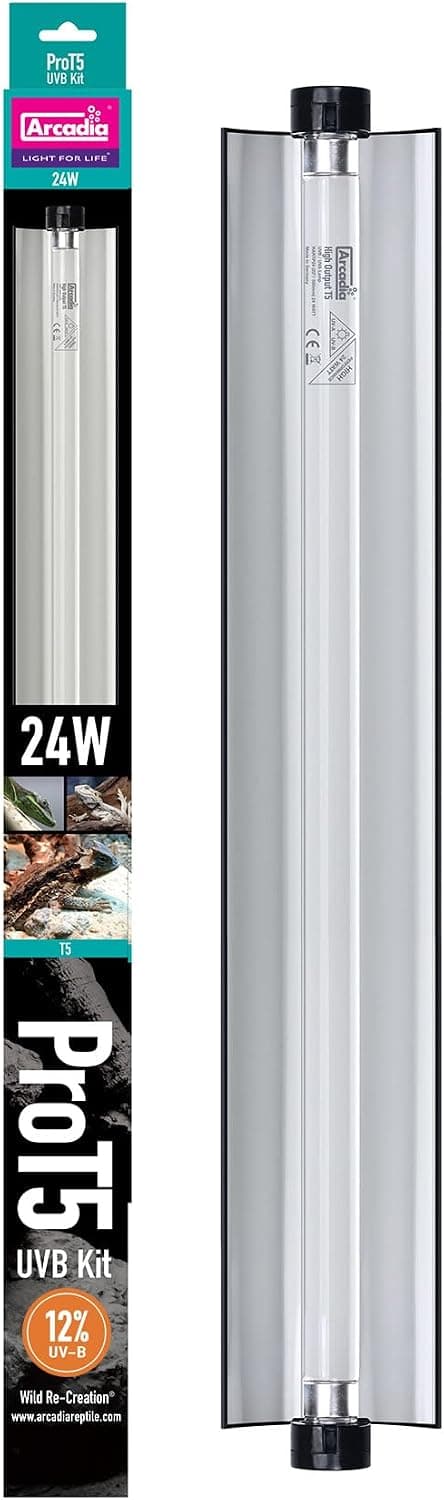
+ Arcadia is a respected UVB specialist brand among reptile keepers
From our guide: Best UVB Tube Fixtures for Reptile Enclosures
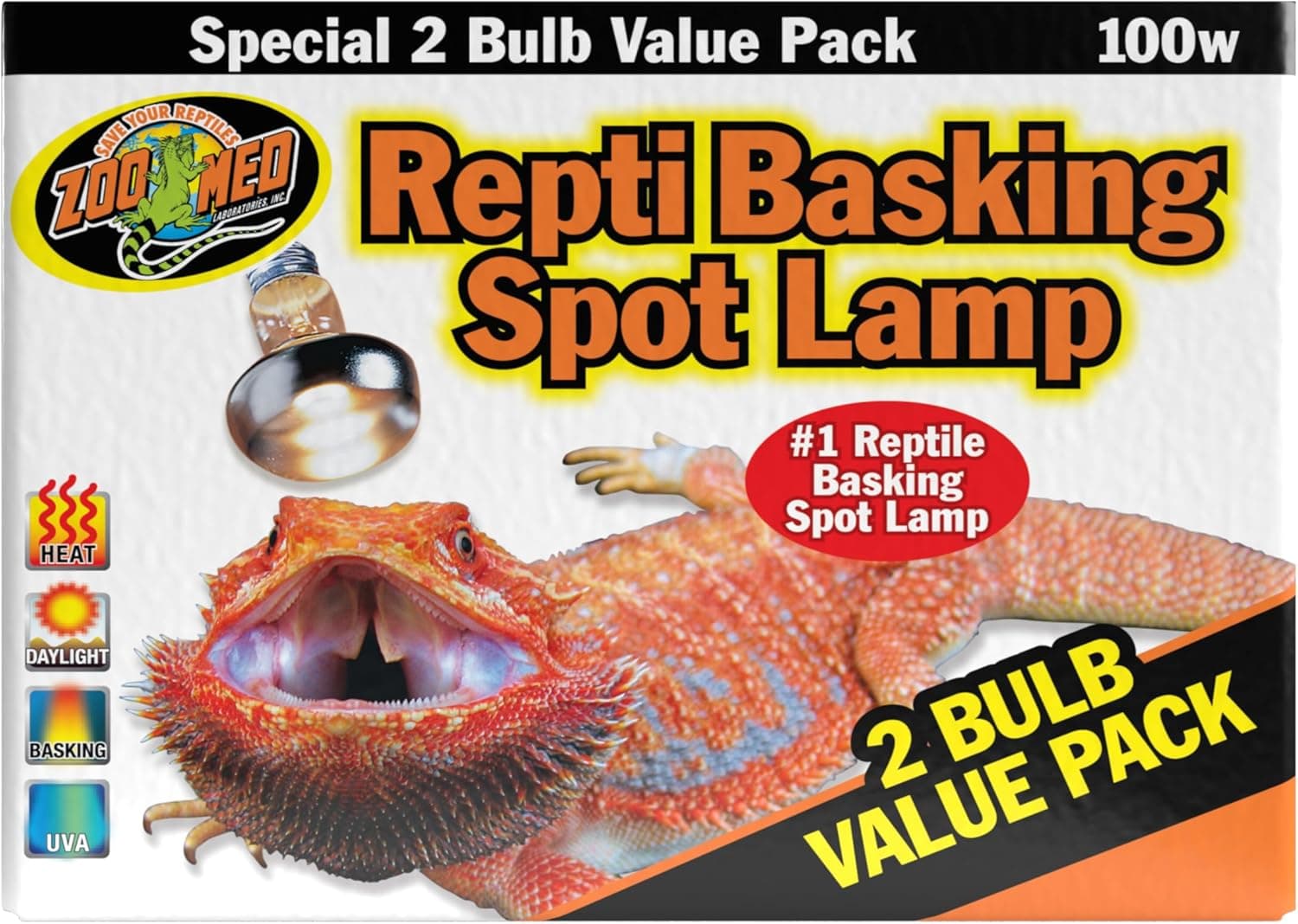
+ Value pack lowers the cost per bulb over the single version
From our guide: Best Basking Bulbs for Reptile Heat Gradients
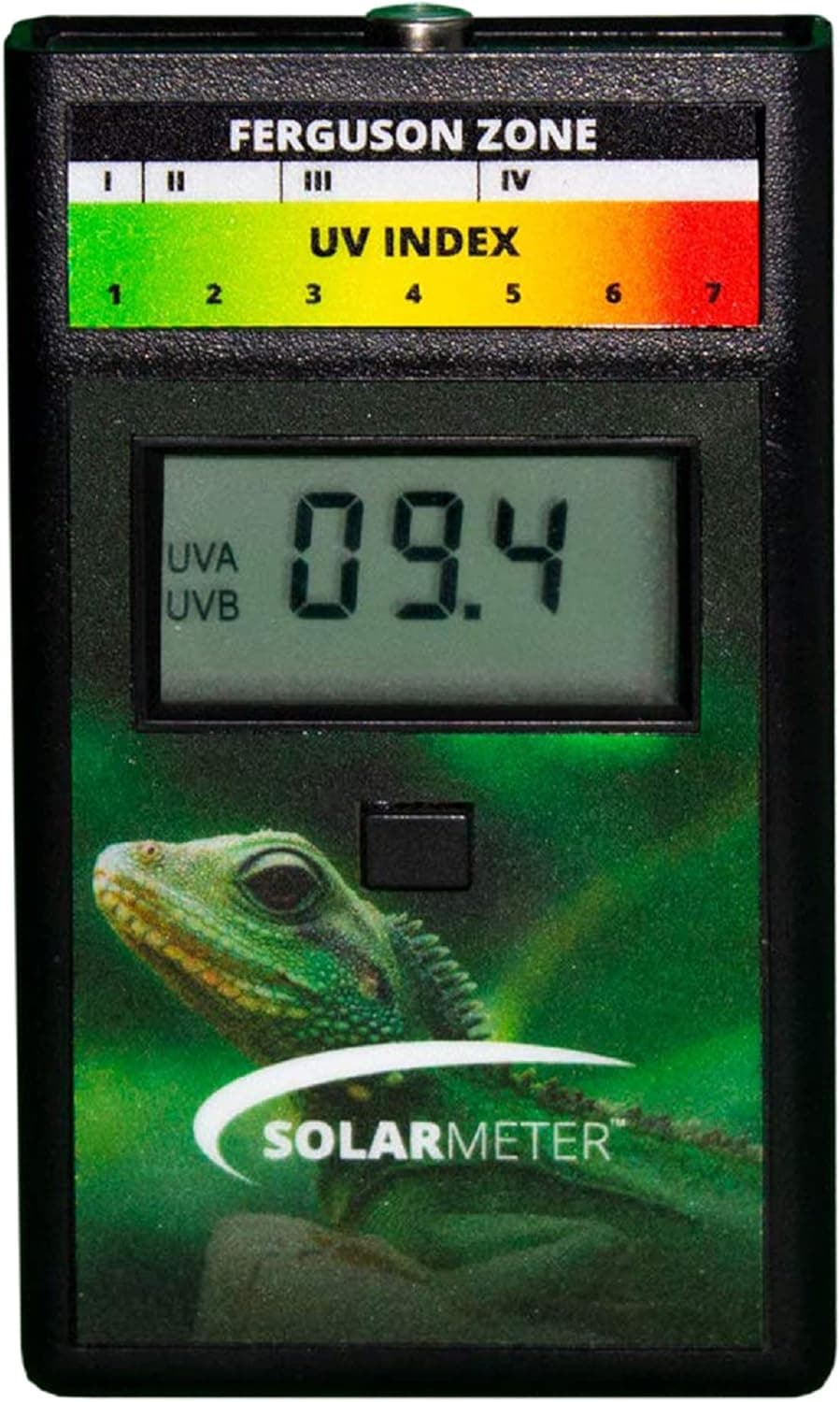
+ Reads UV Index directly, the figure most reptile UV guidance refers to
From our guide: Best UV Index Meters for Checking Reptile Lighting
+ Adjustable emissivity improves accuracy on rock, wood and glass surfaces
From our guide: Best Infrared Thermometers for Reptile Keepers
Popular right now
- Best Reptile Thermometers and HygrometersBuying guide
- Ball Python Setup Walkthrough From Enclosure to First FeedArticle
- Building a Drainage Layer That Keeps a Vivarium HealthyArticle
- Basking Temperatures and GradientsArticle
- Best Basking Bulbs for Reptile Heat GradientsBuying guide
- Best Basking Platforms and LedgesBuying guide
Based on the last 28 days of search and visitor data.