Ceramic Heat Emitter vs Deep Heat Projector
Published How we research
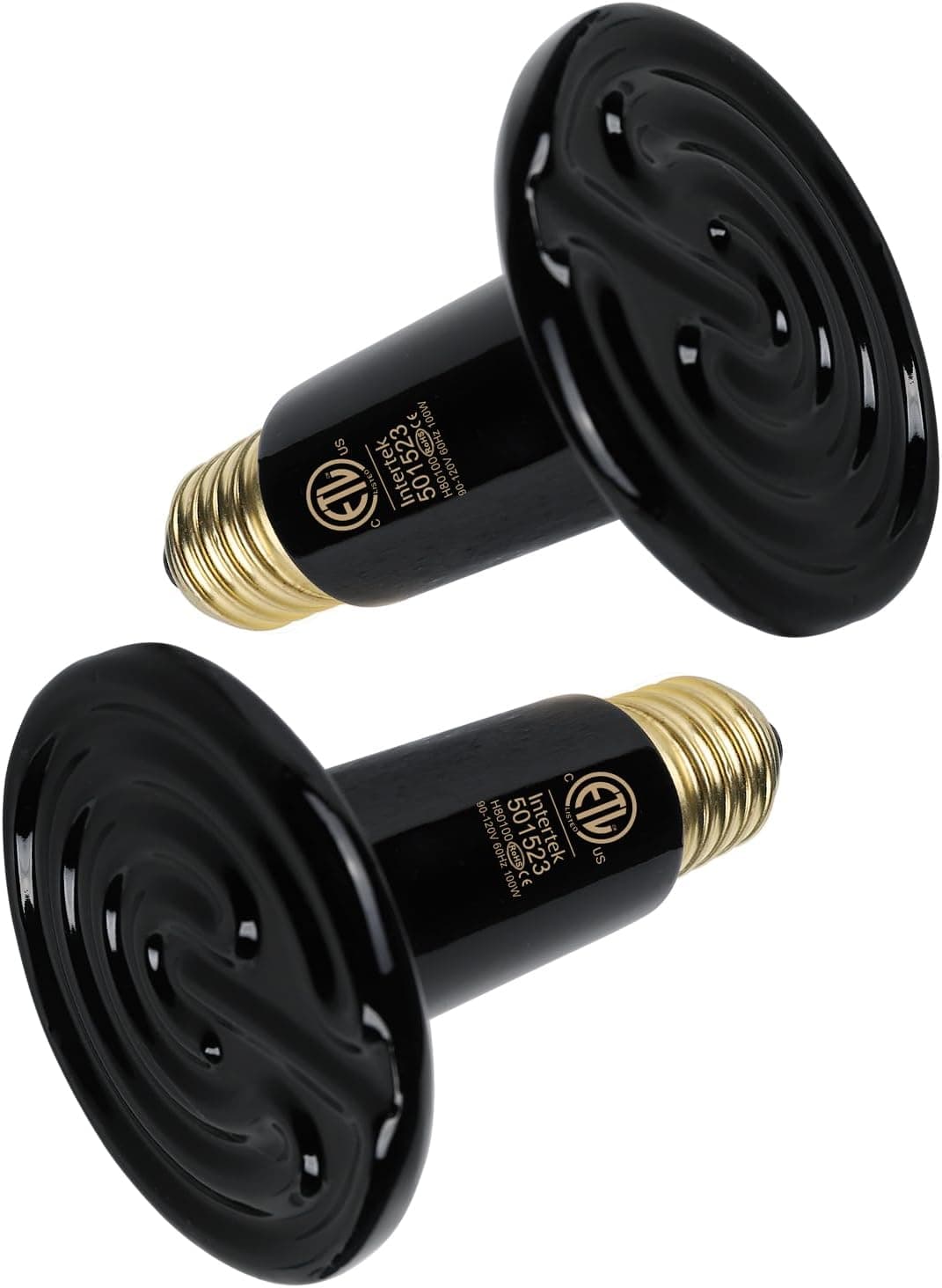
A ceramic heat emitter (CHE) and a deep heat projector (DHP) both produce heat with little or no light, but they heat in different ways. A CHE radiates long-wave infrared in all directions and mainly raises air temperature, which suits background and night heat. A DHP directs shorter-wave infrared downward at one zone, which suits a lightless basking spot. Neither replaces a bright basking lamp or UVB for day-active species. Below: how each one works, the thermostat and fixture each needs, and which to choose for common setups.
How a ceramic heat emitter works
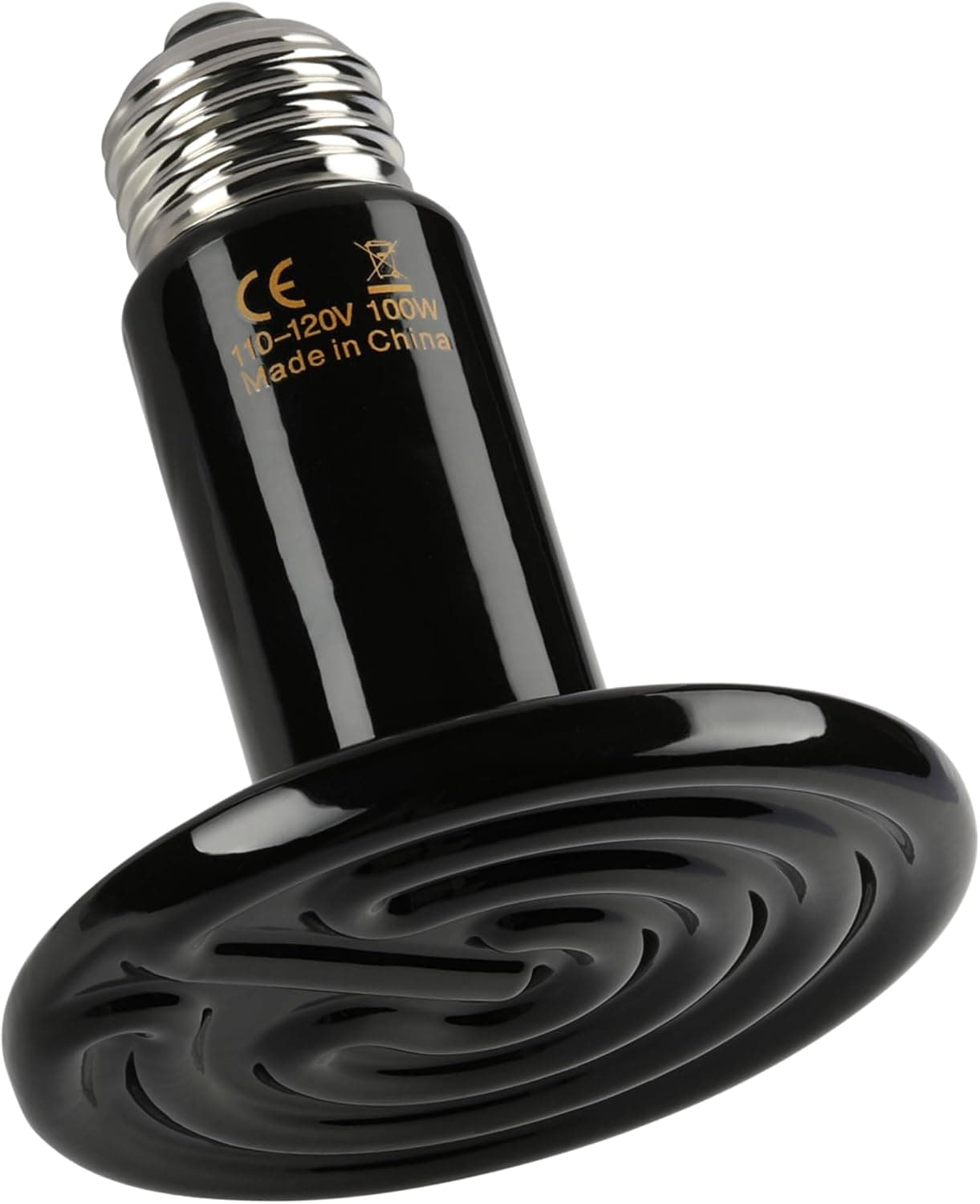
A ceramic heat emitter is a heating element sealed inside a ceramic body that screws into a standard E26 lamp socket. It gives off no visible light at all. Its output is mostly long-wavelength infrared, often labeled IR-C, which is absorbed at the surface of whatever it reaches and warms the surrounding air. In practice a CHE behaves like a small space heater for the enclosure: it lifts the ambient temperature more than it creates a defined hot spot. Common sizes run from 25 to 150 watts.
Because it works by warming the air, a CHE also lowers relative humidity near it, as any air heating does. In humid setups that can mean extra misting or a moister substrate to hold the same reading. The ceramic surface gets far hotter than a light bulb, with no glow to warn you, so it must be mounted in a ceramic or porcelain socket and kept out of the animal's reach behind a guard or screen.
How a deep heat projector works
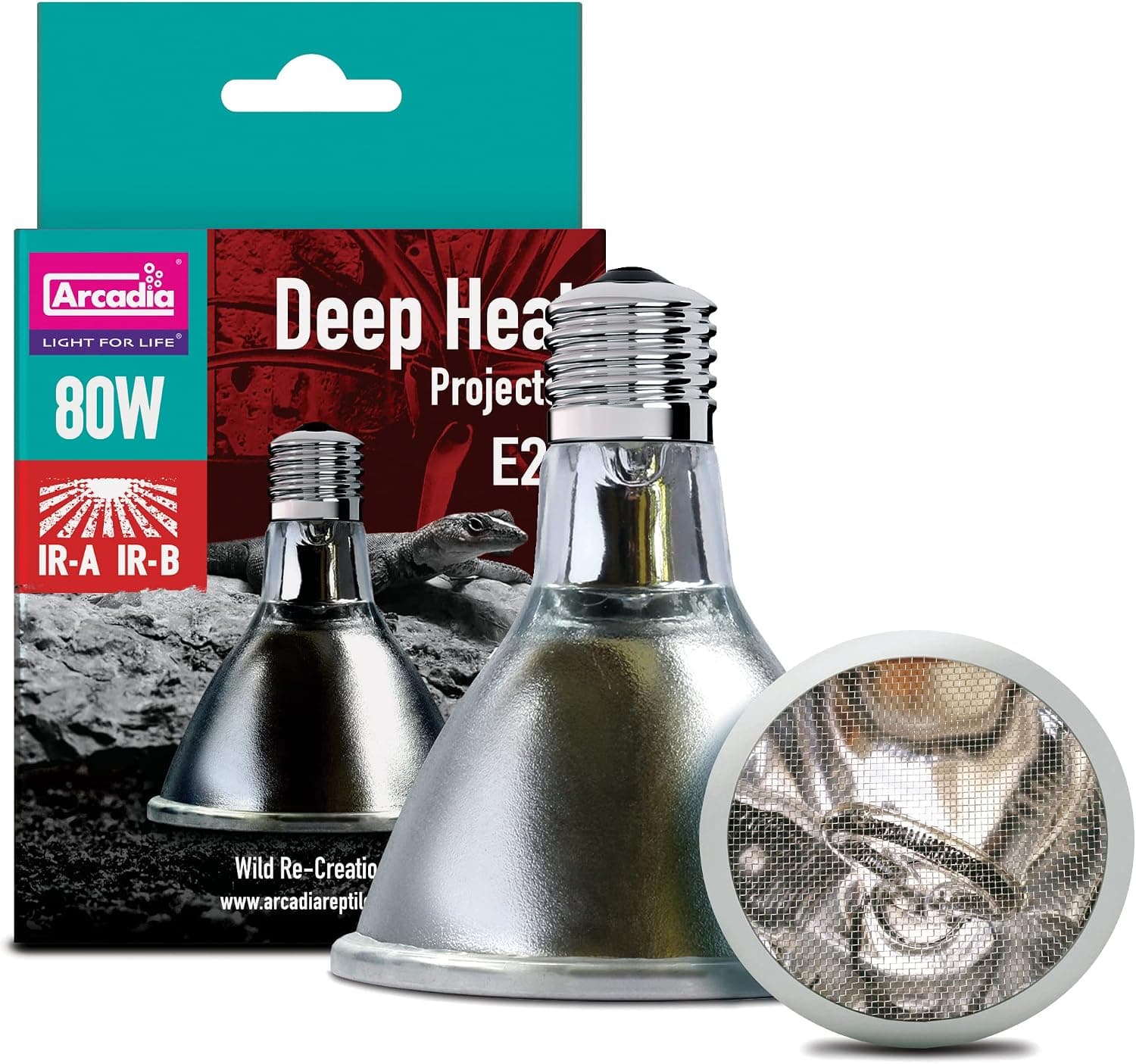
A deep heat projector is a lamp-shaped heater, usually built around a carbon fiber element with a reflector behind it. It emits infrared in the shorter IR-A and IR-B bands along with some longer-wave heat, and it produces little or no visible light: a faint glow at most. Sunlight contains the same shorter wavelengths, and manufacturers describe them as warming an animal's tissue more deeply than the IR-C from a ceramic emitter. DHPs are commonly sold in sizes from 50 to 100 watts.
The reflector makes a DHP directional. Instead of warming the whole air volume, it creates a warm zone on the surface below it, much like a basking lamp without the light. That makes distance important: measure the surface under it with an infrared temperature gun and adjust height or thermostat setting until the reading is right for your species. A DHP is still not a light source, so day-active baskers need a bright lamp as well.
Side by side: the differences that matter
Heat type: a CHE gives long-wave infrared that mainly heats air and surfaces, while a DHP adds the shorter IR-A and IR-B bands. Direction: a CHE radiates all around and raises ambient temperature, while a DHP throws heat downward onto one zone. Light: a CHE gives none, and a DHP gives none to a faint glow. Both screw into an E26 socket and both need a ceramic or porcelain fixture.
Control: a CHE runs well on a pulse proportional thermostat and acceptably on a simple on/off unit, while DHP makers generally recommend a dimming thermostat. Cost: ceramic emitters are usually the cheaper of the two. Lifespan: manufacturers commonly rate ceramic emitters for several thousand hours and some claim around 10,000 hours, while DHP ratings vary by brand and some listings give no figure at all.
Thermostats, fixtures and safe mounting
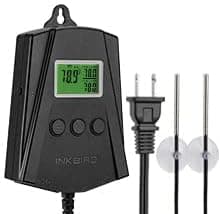
Both heaters must run on a thermostat with its probe placed in the zone being heated. Plugged straight into the wall, either one runs at full power around the clock and can overheat an enclosure. For a CHE, a pulse proportional thermostat holds temperature most steadily, and an on/off thermostat works with wider swings because there is no light to flicker. For a DHP, follow the maker's guidance and use a dimming thermostat.
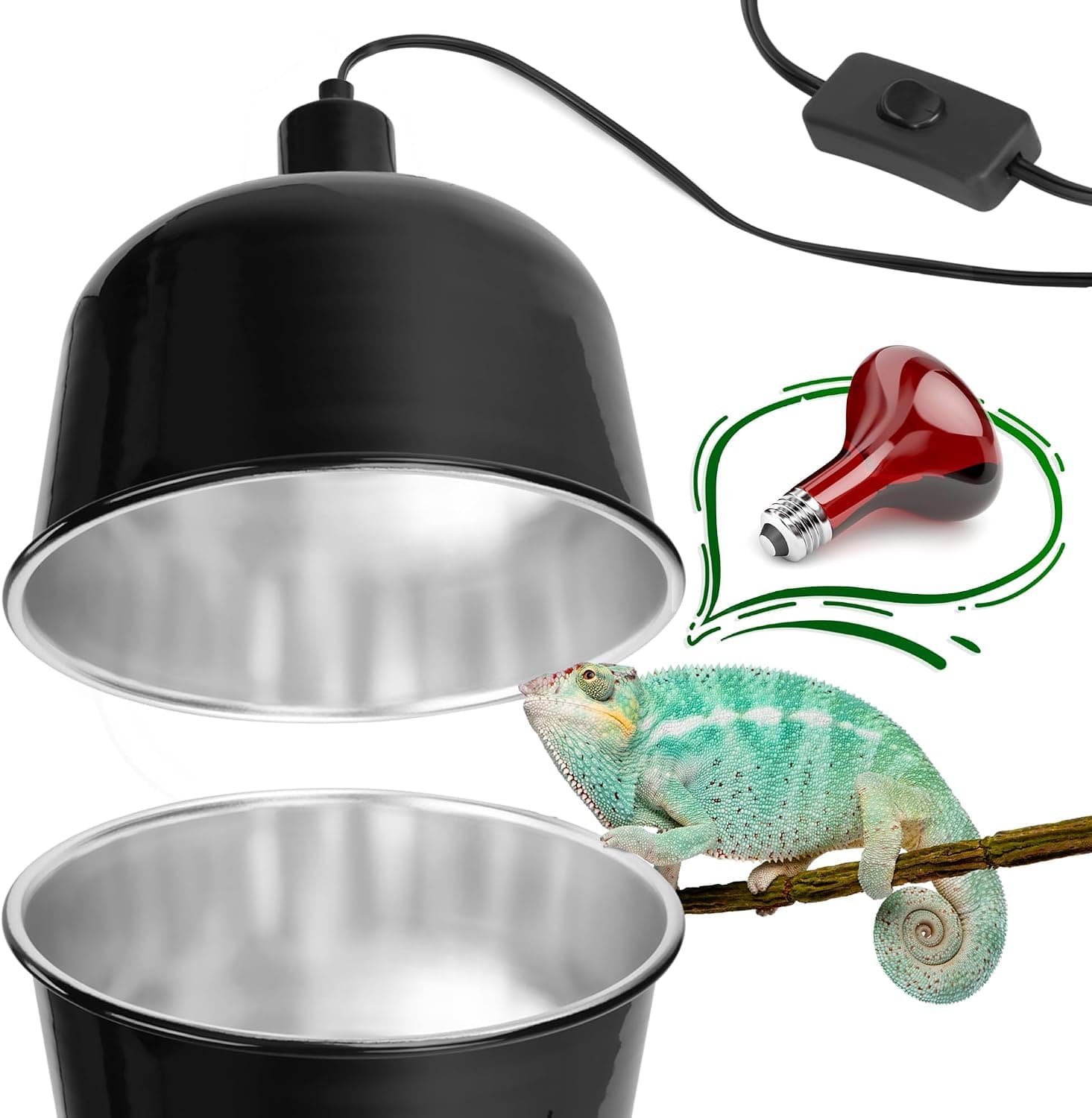
Use a dome or clamp fixture with a ceramic or porcelain socket rated for at least the wattage of the heater. Plastic sockets are made for cooler bulbs and can fail under this kind of heat. Mount the heater above a screen top or behind a guard inside the enclosure, keep it clear of anything flammable, and let it cool fully before handling. Avoid spraying water onto a hot ceramic emitter, since a sudden temperature change can crack it.
Which one to choose for your setup
Choose a ceramic heat emitter when the job is background warmth: raising night or ambient temperature in a room that gets cold, or adding gentle heat to a large enclosure without adding light. It is the lower-cost option and tolerant of simple thermostats. Check your species' night minimum first. Many reptiles do well with a night drop and need no night heat in a normally heated home.
Choose a deep heat projector when you want a warm zone without light. That fits nocturnal and crepuscular species that still use overhead warmth, and it works as a supplement beside a halogen lamp in a large enclosure or as night heat aimed at one area. For day-active baskers such as bearded dragons, the main daytime heat should still be a bright basking lamp, with a CHE or DHP only for nights or as a supplement when the room requires it.
Some keepers run both: a DHP for the warm zone and a CHE for ambient temperature, each on its own thermostat. Whatever the combination, judge it by measurements at the warm end, the cool end and the basking surface, not by wattage.
Frequently asked questions
Do ceramic heat emitters or deep heat projectors give off light? A ceramic heat emitter gives off no visible light. A deep heat projector gives off very little, a faint glow at most, so both can be used at night without lighting the enclosure.
How long does a ceramic heat emitter last? Manufacturers commonly rate them for several thousand hours of use, and some claim around 10,000 hours. Real life depends on how often the thermostat cycles it, knocks, and moisture. Replace one that shows cracks or no longer holds the set temperature.
Can I run a CHE or DHP without a thermostat? No. Both draw full power continuously when plugged straight into the wall, and neither gives a visible sign of how hot it is. A thermostat with a correctly placed probe is the basic safety device for any heater in an enclosure.
Can a CHE or DHP replace a basking bulb? Not for day-active basking species, which need bright visible light along with heat. For nocturnal and crepuscular species a deep heat projector can serve as the main overhead heat source, with temperatures confirmed by measurement.
Products from this article
The highest-scoring picks from the buying guides mentioned above. Scores are our editorial assessment, not customer ratings.
+ Included digital thermostat controls the emitter from day one
From our guide: Best Ceramic Heat Emitters for Night and Ambient Heat
+ Deep beam infrared warms animals the way sunlight does
From our guide: Best Deep Heat Projectors for Terrariums
+ 2 probes and 2 outlets control two heat mats or two enclosures independently
From our guide: Best Thermostats for Reptiles
+ 2 Pack covers a basking lamp and a UVB or ceramic heat bulb together
From our guide: Best Dome Lamp Fixtures for Reptile Heat and UVB
Popular right now
- Best Reptile Thermometers and HygrometersBuying guide
- Ball Python Setup Walkthrough From Enclosure to First FeedArticle
- Building a Drainage Layer That Keeps a Vivarium HealthyArticle
- Basking Temperatures and GradientsArticle
- Best Basking Bulbs for Reptile Heat GradientsBuying guide
- Best Basking Platforms and LedgesBuying guide
Based on the last 28 days of search and visitor data.