Supplements and Dusting Basics Without the Confusion
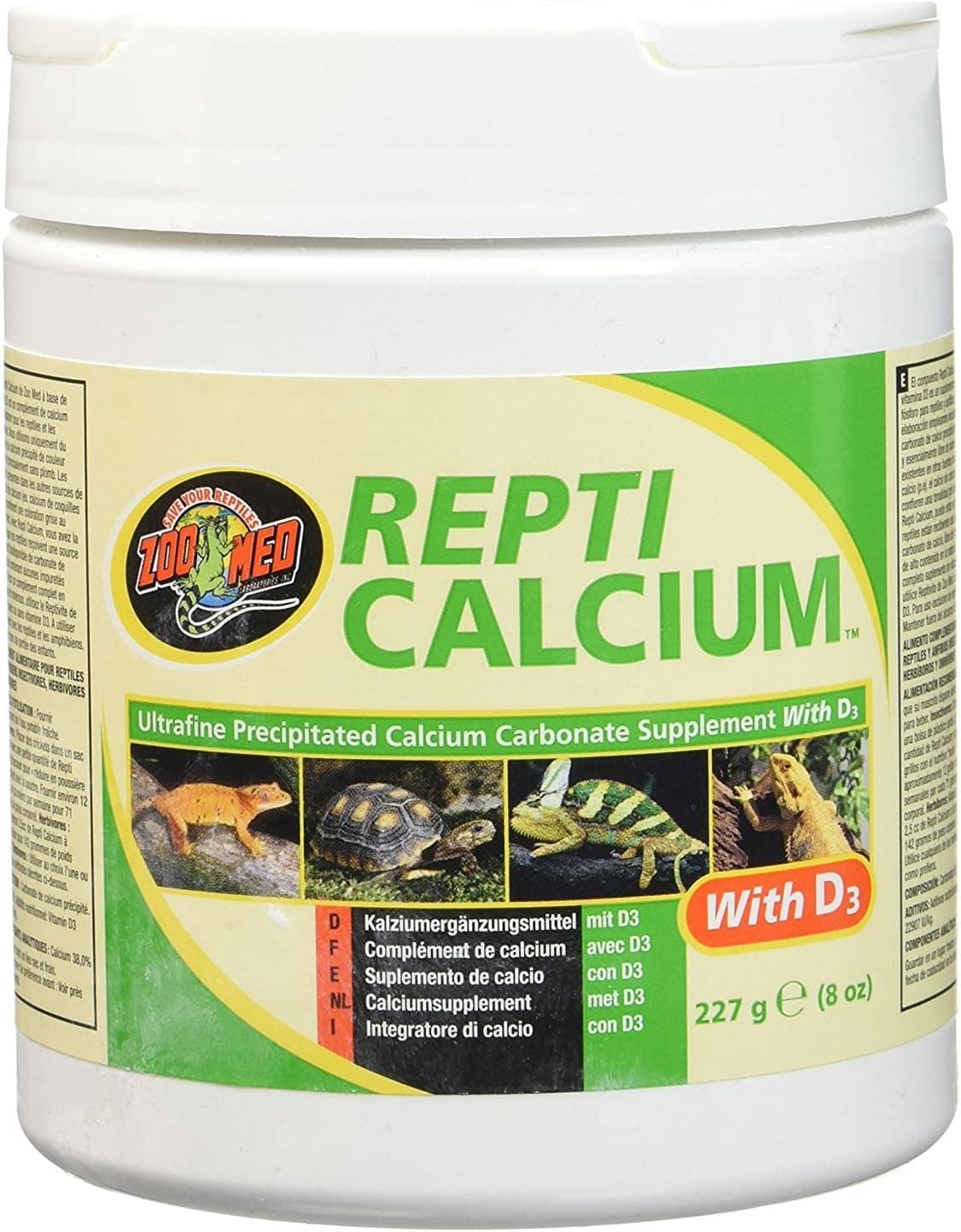
Supplementation exists to close the gap between what a captive diet provides and what a wild diet would. The two main products are calcium powder and a multivitamin, and calcium comes in two forms: with added vitamin D3 and without. Which combination you use, and how often, depends on the species, its diet, and whether it is receiving adequate UVB. Getting this approximately right matters a great deal, and both too little and too much can cause harm, so it is worth understanding the logic rather than copying a schedule from an unrelated species.
Calcium is needed for bone and for basic muscle and nerve function, and most captive diets are short of it. Feeder insects in particular contain considerably more phosphorus than calcium, so insectivorous species need calcium added routinely. Plain calcium without D3 can be given more frequently, since the body regulates how much it absorbs. Calcium with D3 is different: D3 is fat soluble, it accumulates in the body, and excess is genuinely harmful, so it is used more sparingly and its frequency depends on whether the animal is making its own D3 under UVB.
This is where UVB and supplements interact. A species with good UVB provision produces D3 in its skin and generally needs less dietary D3, so many keepers of well lit basking species use plain calcium at most feedings with only occasional D3. A species kept without UVB depends entirely on dietary D3, so it needs a supplement schedule that supplies it reliably. Changing one side of this equation means revisiting the other. If you upgrade a setup by adding proper UVB, review the supplement routine at the same time rather than continuing both at full strength.
Multivitamins cover everything else, most importantly vitamin A, and they are usually given less frequently than calcium, often once every week or two depending on the species and product. Follow the manufacturer's guidance for the specific product, because concentrations differ substantially between brands and a schedule that suits one product may over or under supply with another. Store powders sealed, dry, and away from heat, and replace them by the expiry date, since vitamin content degrades over time and an old tub is not delivering what the label claims.
The mechanics of dusting are simple. Put the feeder insects into a bag, cup, or dedicated shaker with a small amount of powder, shake gently until the insects are lightly coated, and offer them promptly, since active insects groom the powder off within minutes. A light dusting is the goal, not a thick white coating, which many animals will refuse and which can irritate eyes. For herbivorous species, a light sprinkle over the salad serves the same purpose. Species that eat whole vertebrate prey generally need little or no supplementation, because whole prey is nutritionally complete.
Two mistakes account for most supplement problems. The first is a leaving a dish of calcium powder in the enclosure as a free choice option, which is popular but makes intake impossible to control and is not appropriate for every species. The second is stacking products without thinking, using a D3 calcium at every feeding alongside a multivitamin that already contains D3, which can push intake too high. Read the labels and count what is actually being delivered. Because dosing sits close to medical territory and because both deficiency and excess cause real disease, a species specific care sheet and a reptile experienced veterinarian are the right sources for a routine you can rely on, particularly for a breeding female, a growing juvenile, or an animal that is already unwell.