Cleanup Crews Explained
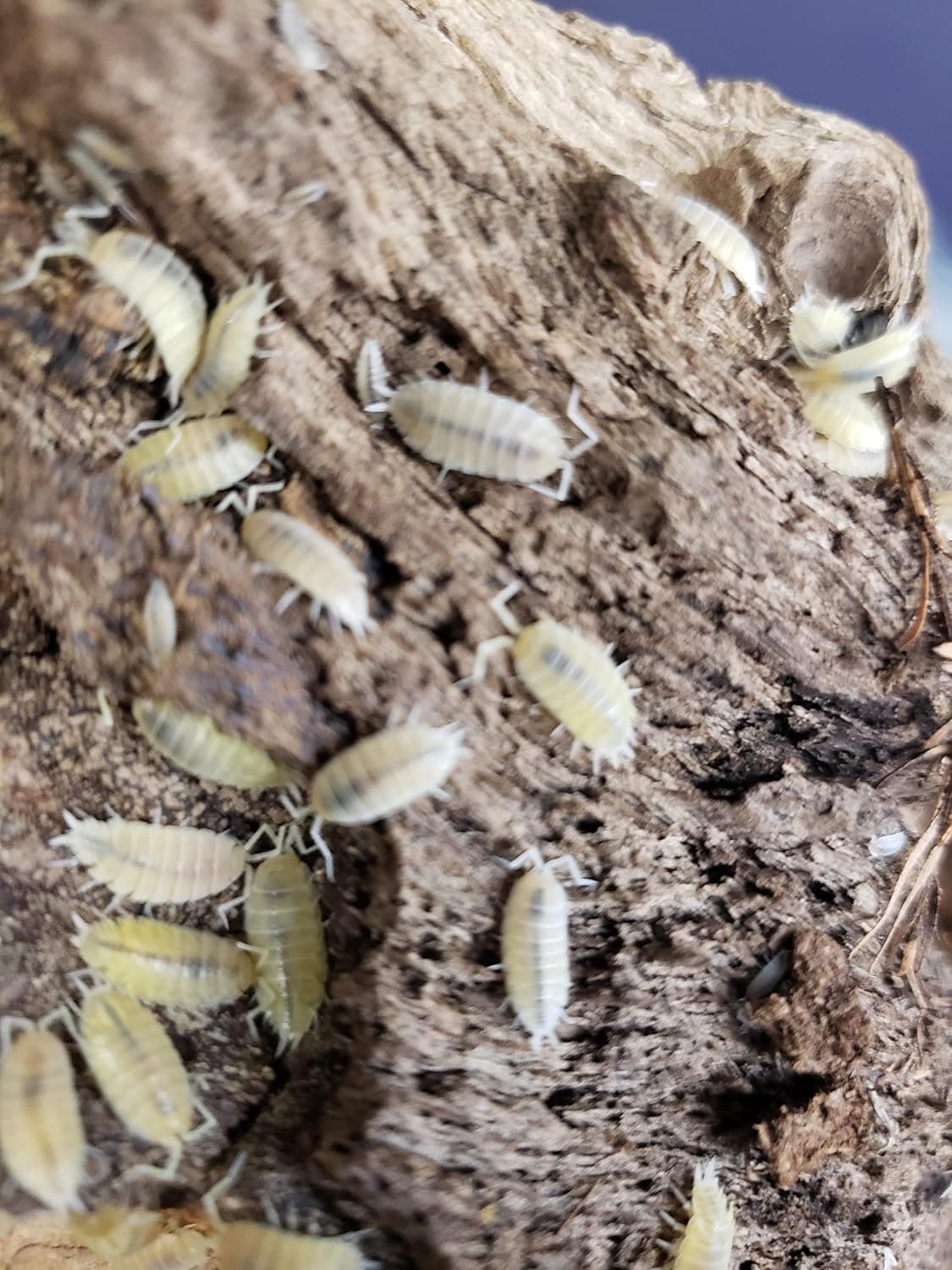
A cleanup crew is the population of small invertebrates that lives in the substrate of a bioactive enclosure and breaks down waste. Springtails and isopods do the bulk of the work, feeding on droppings, shed skin, uneaten food, decaying plant matter, and mould. Together with the fungi and bacteria in the soil, they turn material that would otherwise foul the substrate into something the plants can use. Understanding them as livestock rather than as a product is the shift that makes bioactive keeping work: they need food, moisture, and time to establish.
Springtails are tiny, fast breeding, and specialised at consuming mould and very fine organic matter. They thrive in damp conditions and are usually the first crew members to boom in a new setup, which is exactly why the mould bloom that alarms new keepers in week two often disappears on its own. Isopods are larger crustaceans that handle bulkier material such as droppings and leaf litter. Different isopod species suit different conditions: some prefer consistently damp tropical setups, others tolerate drier enclosures, and they vary a lot in size, breeding speed, and how much they burrow. Choose species that match your humidity, not the ones that look most interesting in photographs.
Seeding is best done generously and early. Add the crew to the enclosure several weeks before the animal moves in, along with a deep layer of leaf litter and some decaying wood, so they have both food and refuge. A common practice is to build small refuges the animal cannot easily disturb, such as a piece of cork bark laid on the substrate or a pocket of leaf litter in a corner, which gives the population somewhere to breed undisturbed. A crew that has to establish while being predated from day one rarely gets going.
Crews need feeding, and this is the most commonly skipped step. Leaf litter is their staple, and it is consumed, so it must be topped up as it disappears. Beyond that, many keepers offer small amounts of supplementary food such as pieces of dried leaves, decaying hardwood, or a small portion of vegetable matter, removing anything that goes slimy rather than letting it rot. Do not overfeed: excess food attracts grain mites and fungus gnats, both of which are harmless to the animal but unpleasant to look at and a sign that the balance is off.
Crashes usually have simple causes. A substrate that has dried out will wipe out springtails quickly, since they need moisture. A substrate that is waterlogged suffocates isopods. Residues from cleaning products, pesticides on plants bought from a general garden centre, or medications passed through in animal waste can all kill a crew. If the population disappears, look at moisture first, then at anything new that entered the enclosure. Reseeding is straightforward once the cause is fixed.
Set expectations sensibly. A cleanup crew is not a substitute for spot cleaning in an enclosure with a large animal, because the waste volume from a big lizard or snake exceeds what a crew can process before it starts to smell. It does not sterilise anything, and it does not remove the need for correct temperature, humidity, and ventilation. It also does not protect against parasites, so a new animal still needs proper quarantine on simple substrate before joining a bioactive habitat. Used within those limits, a healthy crew is one of the most satisfying parts of the hobby and quietly does a real job every single day.