Crested Gecko Setup Walkthrough for a Planted Vivarium
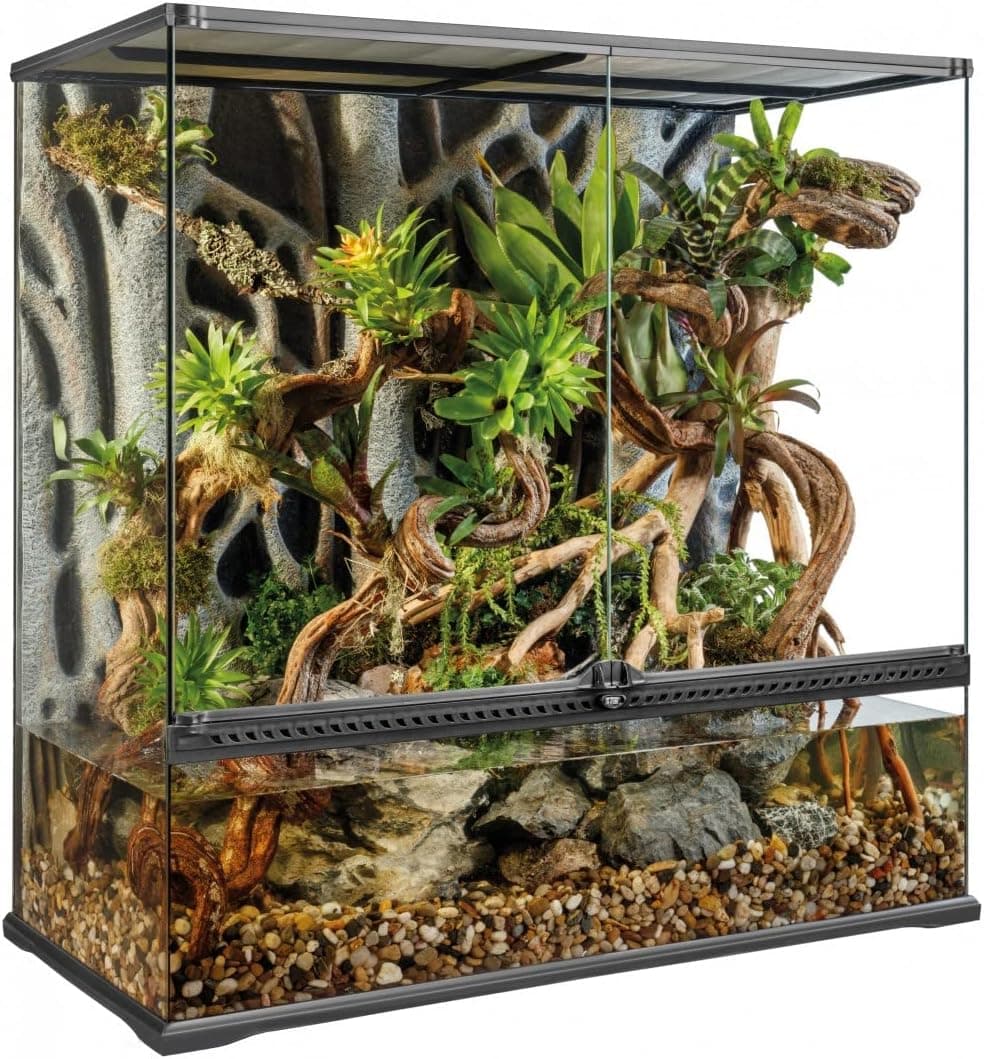
Crested geckos need a tall, front-opening enclosure prioritizing height over floor space, with a screen top for ventilation. They tolerate typical household room temperatures and are harmed by sustained heat, so many homes need no supplemental heating at all. Humidity should cycle with a heavy evening misting followed by a daytime drying period, not constant dampness. Furnish with connected climbing routes from substrate to the top using cork tubes, branches, and broad-leaved plants. Feed a complete commercial crested gecko diet as the staple, with insects offered occasionally for enrichment, and replace uneaten wet diet daily. Crested geckos are arboreal, nocturnal geckos from New Caledonia, and they are one of the few popular species where the ideal setup is also one of the most attractive. They live in vertical space, need moderate temperatures rather than a strong basking site, need a daily humidity cycle rather than constant damp, and eat a commercially formulated diet that removes most of the nutritional guesswork. The main pitfalls are heat and height: they are notably intolerant of high temperatures, and they do poorly in enclosures with no route through the upper space.
Choose a tall, front-opening enclosure
Choose a tall, front opening enclosure and prioritise height over floor length. Adults need meaningful vertical space with dense cover, and juveniles do fine in a smaller enclosure or in a large one that has been heavily planted so they always have something within reach. A screen top provides the ventilation this species needs, since stagnant humid air causes problems, and combining good ventilation with a moisture retentive substrate is how you get the humidity cycle right rather than a constantly wet enclosure.
Temperature: where crested geckos differ most
Temperature is where crested geckos differ most from other popular species. They are comfortable at typical household room temperatures and are harmed by sustained heat above their tolerance range, so in many homes no supplemental heating is needed at all. Check the current care sheet figures, then measure your room across the warmest part of the day in summer, since a room that is fine in March can become dangerous in July. If heating is required in a cold home, use a low output source on a thermostat and keep a genuine cool retreat available. Cooling, not heating, is the more common summer concern.
Humidity should cycle, not sit flat
Humidity should cycle rather than sit flat. The usual pattern is a heavy misting in the evening that raises humidity substantially, then a drying period through the day, with a lower baseline in between. Achieve this with a moisture retentive substrate such as a coconut fibre and soil mix topped with leaf litter, a good sized water dish, and misting once or twice daily. Constant saturation with poor airflow causes skin and respiratory problems, so the drying period is as important as the peak. Use a digital hygrometer and watch the pattern across the day rather than a single reading.
Furnish for climbing with connected routes
Furnish for climbing, and think in terms of connected routes. Cork tubes and flats, branches at varied angles and diameters, bamboo, vines, and broad leaved plants such as pothos give both travel paths and daytime sleeping spots, since crested geckos typically sleep pressed against a leaf or inside a cork tube rather than in a ground hide. Make sure routes reach from the substrate to the top of the enclosure without a gap that forces a drop. Live planting suits this species well and a bioactive build is a natural fit, provided you let it establish before the gecko moves in.
Feeding is straightforward with a commercial diet
Feeding is straightforward. A complete commercial crested gecko diet, mixed with water and offered in a shallow dish placed up off the floor, forms the staple and is nutritionally designed for the species, so a well fed crestie on a quality diet needs little else. Many keepers offer appropriately sized insects once or twice a week as enrichment and variety, dusted according to their supplement routine. Replace uneaten wet diet daily, since it spoils. Weigh regularly, handle gently and briefly, remember that these geckos jump readily and can drop their tail permanently, and take any weight loss, persistent food refusal, or sign of illness to a reptile experienced veterinarian.
Frequently asked questions
Do crested geckos need heating equipment? Often not. They are comfortable at typical household room temperatures and are harmed by sustained heat above their tolerance range, so in many homes no supplemental heating is needed at all.
How should humidity work in a crested gecko enclosure? It should cycle rather than sit flat: a heavy evening misting raises humidity substantially, followed by a drying period through the day, since constant saturation with poor airflow causes skin and respiratory problems.
What enclosure shape is best for crested geckos? A tall, front-opening enclosure that prioritizes height over floor length, since crested geckos are arboreal and need vertical climbing space more than floor area.
What should I feed a crested gecko? A complete commercial crested gecko diet mixed with water forms the staple, since it's nutritionally designed for the species; appropriately sized insects can be offered once or twice a week for variety.