Setting Up Your First Terrarium
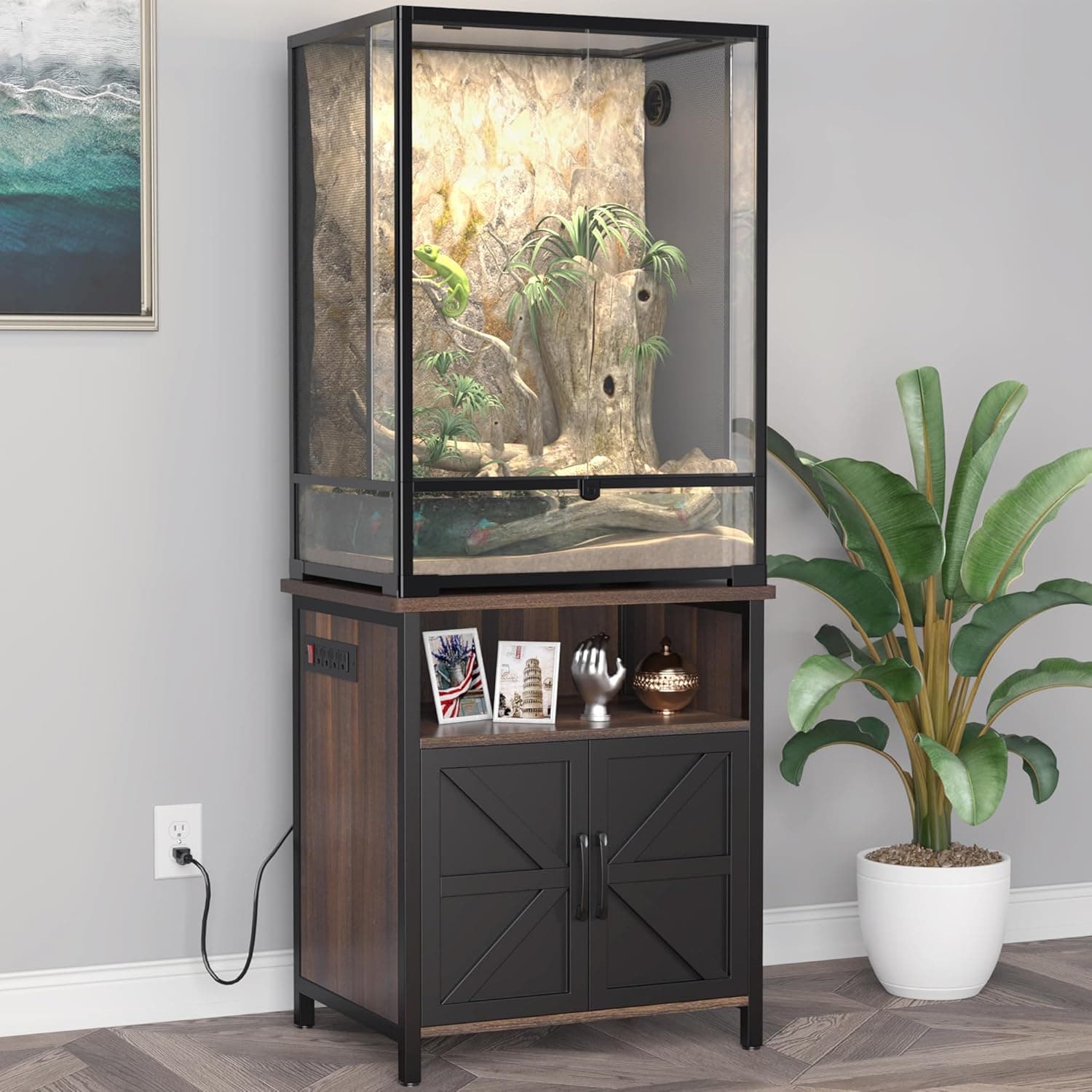
The single most useful habit a new keeper can build is this one: set the habitat up completely, run it for a week, and only then bring the animal home. A terrarium is a small climate you are responsible for maintaining, and climates take time to settle. Heat sources drift, humidity swings, and substrate holds moisture differently once it has been sitting a few days. If you buy the animal first and improvise the enclosure around it, you spend the first month troubleshooting under pressure. Doing it in the other order costs you one patient week and saves a great deal of stress for both of you.
Start from the species, not from the enclosure on the shelf. Before you buy anything, read at least two independent care sheets for the exact species and, where relevant, the locality or morph. Write down four numbers: adult size, target basking or warm side temperature, target cool side temperature, and target humidity range. Note also whether the species is terrestrial or arboreal, nocturnal or diurnal, and whether it needs UVB. Every purchase you make afterwards should trace back to one of those notes. This is what separates a habitat built for an animal from a habitat built for a shop display.
With the numbers in hand, choose the enclosure. Front opening glass or PVC terrariums are the usual starting point because they are easy to access without looming over the animal from above, which most reptiles read as a predator approach. Screen tops vent heat and humidity quickly, which suits arid desert species and works against tropical ones. Match the shape to the animal: floor space for a terrestrial gecko or a bearded dragon, height and branch routes for an arboreal species. Bigger is generally better as long as the animal can still find its temperatures and enough cover to feel secure.
Next comes the equipment layer. Heating goes on one end only, never spread across the whole floor, because the animal needs a temperature gradient to regulate itself by moving. Every heat source gets a thermostat, without exception. If the species needs UVB, plan the fixture position and the distance from the basking spot at the same time you plan the heat, since those two things interact. Add your substrate to the depth the species uses, then hides: at minimum one on the warm side and one on the cool side, so the animal never has to trade security for temperature. Water goes in a dish the animal can reach and, ideally, cannot tip.
Now run the empty habitat. Place a digital probe thermometer at the basking surface and a second on the cool end, plus a hygrometer for humidity, and read them across a full day and night. Cheap analogue dial gauges are not accurate enough for this job. Adjust bulb wattage, thermostat setpoint, ventilation, and substrate moisture until the readings sit inside your target ranges without you fussing at them. Expect to make several small changes. A habitat that holds its numbers on its own for several consecutive days is ready.
When the animal moves in, resist the urge to interact. Give a settling period of one to two weeks with food offered, water available, and handling kept to nothing beyond essential maintenance. Hiding constantly at first is normal and not a sign that something is wrong. Keep a simple log of temperatures, feeding, sheds, and droppings, because a written record is what makes a slow change visible before it becomes a problem. If the animal refuses food for an extended period, loses weight, or shows any sign of illness, contact a reptile experienced veterinarian rather than trying to diagnose it from a forum thread. Your job as a keeper is to hold the environment steady and to notice early when it drifts.