Live Plants That Survive in Terrariums With Reptiles
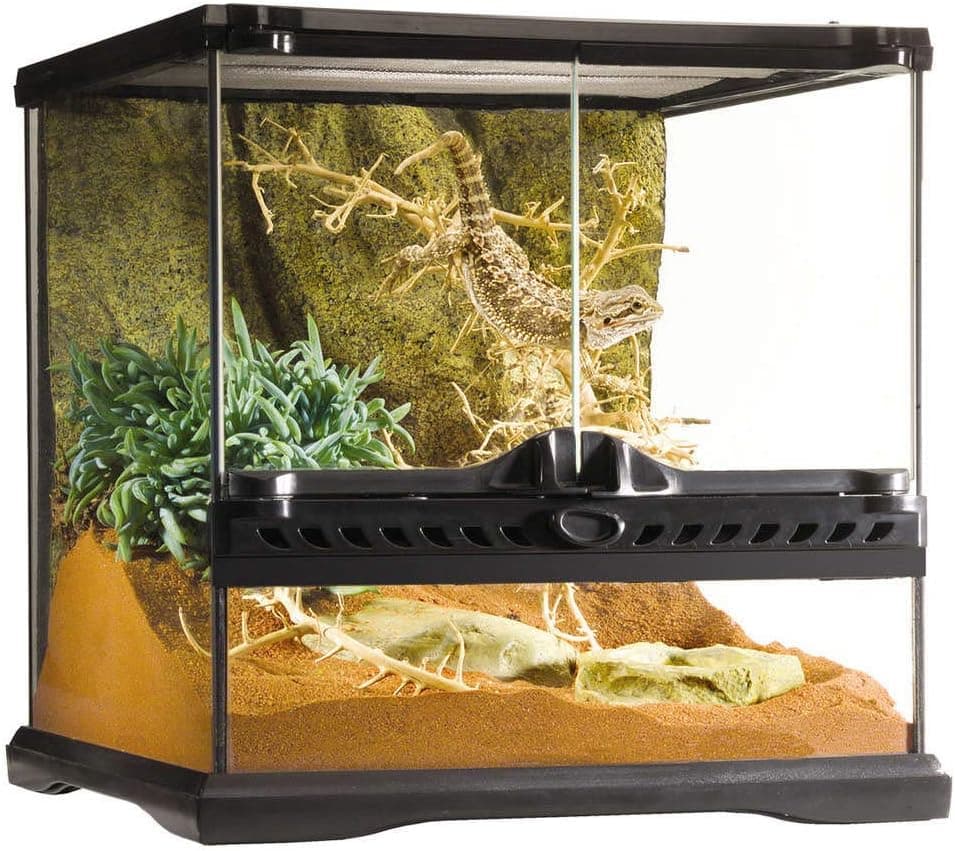
Live plants earn their place in a terrarium for practical reasons before aesthetic ones. They hold and release humidity, provide cover that makes an animal feel secure enough to use open space, give arboreal species natural perching, and feed the cleanup crew with their dead leaves. The catch is that a terrarium is a difficult growing environment: light is often marginal, humidity is either too high or too low, and there is an animal walking on everything. Choosing plants that tolerate those conditions matters more than choosing plants that look right on day one.
For humid tropical setups, the reliable performers are tough, low light tolerant foliage plants. Pothos is the standard recommendation for good reason, since it grows in poor light, roots from cuttings, tolerates being trampled, and can be trained along branches. Snake plants handle neglect and varying moisture and are sturdy enough to survive traffic. Bromeliads suit arboreal enclosures and hold small pools of water in their centres, which some species drink from. Ferns, peperomia, fittonia, and creeping fig do well in high humidity but are more easily crushed. Mosses are attractive but demand consistent moisture and good light, and they frequently fail in enclosures where everything else thrives.
Arid setups need a different palette and more light. Hardy succulents, aloes, haworthia, and sansevieria can work, but they need considerably brighter light than tropical foliage and they will rot if the substrate stays damp. Avoid anything with fine spines that could injure an animal, and be aware that a heavy bodied lizard will flatten most succulents eventually. Many keepers of large arid species use a mix of a few robust plants in protected areas plus dried hardscape elsewhere, rather than trying to keep a fully planted floor alive.
Preparation is where most planting failures start. Nursery plants routinely carry systemic pesticides and fertiliser rich soil, neither of which belongs in an enclosure with an animal that may lick or eat foliage. The standard practice is to remove all of the nursery soil, rinse the roots thoroughly, rinse the leaves, and repot into clean terrarium substrate, then grow the plant on outside the enclosure for a period before introducing it. That waiting period lets residues dissipate and lets you see whether the plant is going to survive at all. Check plant safety against a reliable list before adding anything to an enclosure with a herbivorous or omnivorous species.
Light is the constraint people underestimate. A UVB tube alone rarely provides enough visible light for plants to thrive, so most successful planted enclosures add a separate plant light or a high output LED. Run it on the same timer as the rest of the photoperiod. Aim the strongest light where you want the densest growth, and accept that the shaded back corners will only support the most tolerant species. If plants are stretching, pale, and dropping leaves, light is the first thing to check, not water.
Plan for damage and for replacement. A large lizard or a heavy snake will break plants, and that is normal rather than a failure. Protect the root zone of key plants with flat stones or cork so the animal cannot dig them up, position fragile species away from basking sites and travel routes, and keep spare cuttings growing outside the enclosure so replacements are free and immediate. Prune regularly so growth stays dense rather than leggy, and remove dead material only if it is fouling, since in a bioactive setup fallen leaves feed the cleanup crew. A planted enclosure is a garden that happens to contain an animal, and like any garden it needs ongoing attention rather than a single planting day.